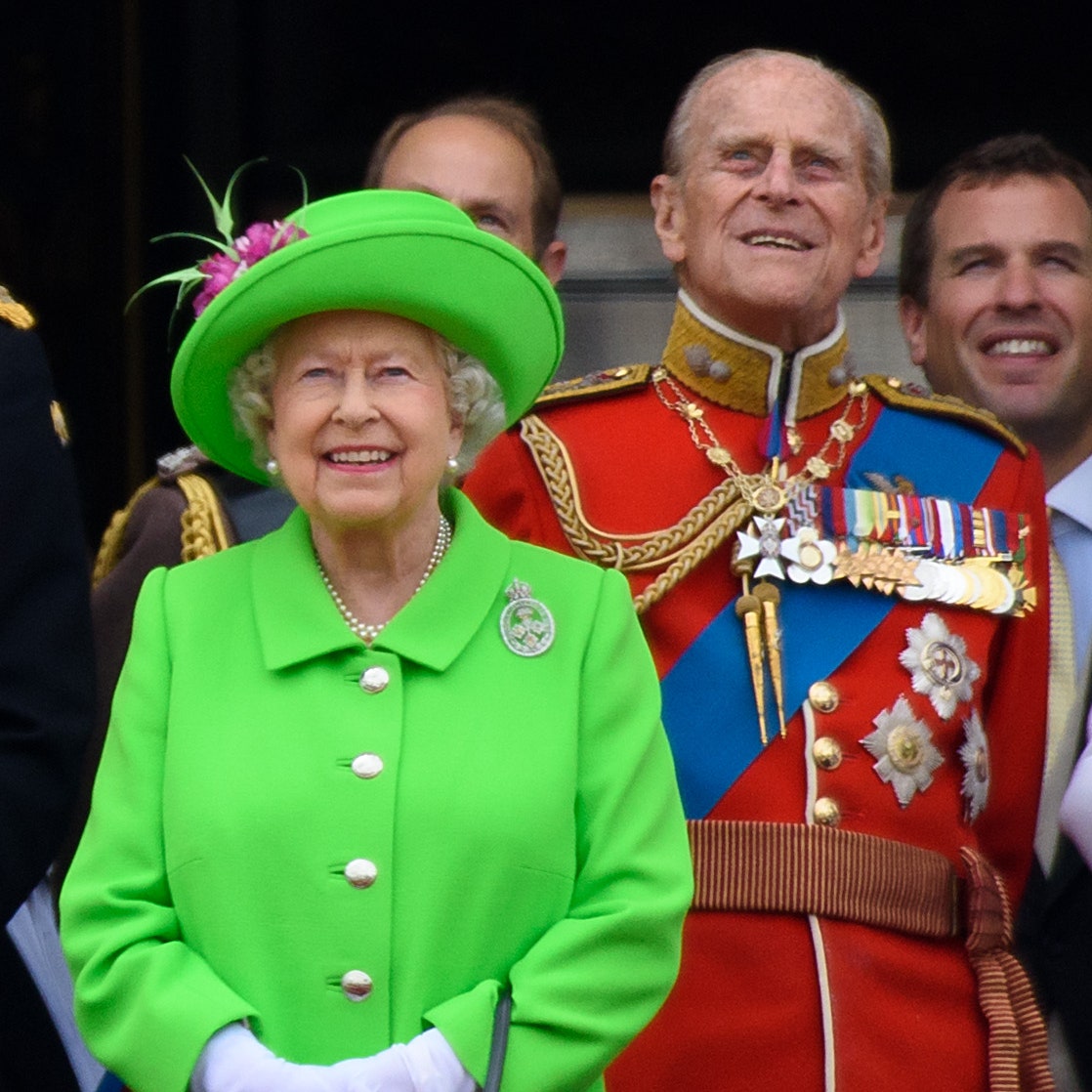
When writing about the Queen I don’t think there’s much point in pretending you are discussing a real person. I can’t claim to be speaking of a particular British woman, aged 91, mother of four, bearing the last name of Windsor, and so on. That person is a stranger to all but her family and friends – and perhaps even to them. We can only speak of the Queen as she appears in the minds of the people. And the thing that has always struck me as deeply odd about the idea of Elizabeth II is the fact that she appears, in our mental picture of her, to be distinctly lower middle-class. It’s strange: all her children are recognisable aristocratic types; her grandchildren are aw’fly posh. Yet around the Queen there hangs this persistent aura of Mrs Windsor.
Read More The Queen’s Style Was A Royal Lesson In Modern Dressing
By Sarah Harris
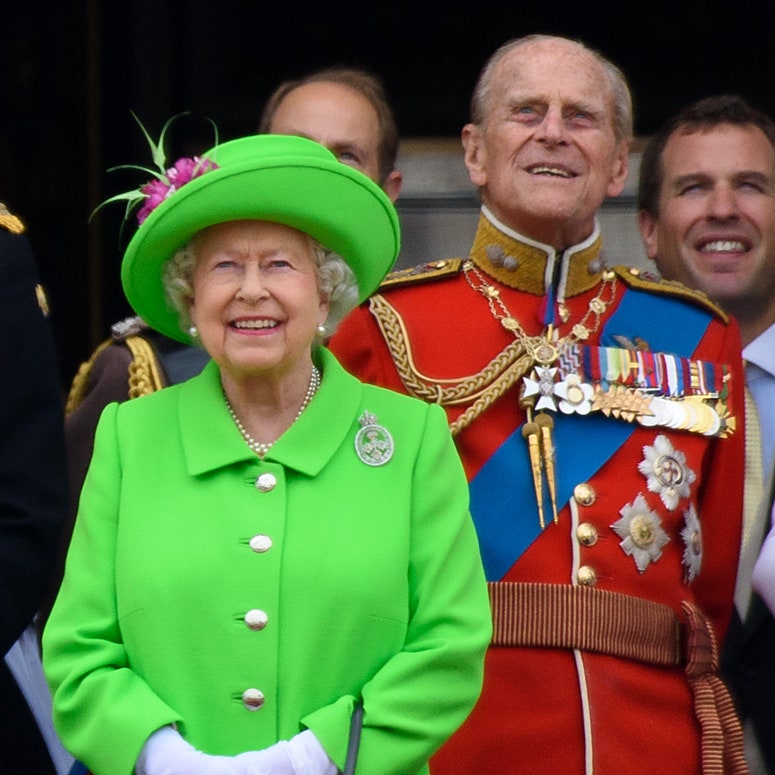
I think this is what accounts for her relative popularity, as compared to her clan – that touch of Mrs Windsor. Consider it: did ever a monarch seem more likely to prefer a nice flowery pelmet curtain to a white wooden shutter? Or a staycation (in front of the telly) to a glamorous Tuscan retreat or Caribbean break? Did any resident of Buckingham Palace – replete as it surely is with bone china and silver serving dishes – ever before have breakfast delivered to their table in air-tight plastic Tupperware alongside a copy of the Racing Post? There is no precedent for such a monarch in either our history books or our fairy tales. The reign of Elizabeth II has been marked not by grandeur and imperiousness – as it was with the first Elizabeth – but by a quality of intense familiarity, the by-product of the unprecedented replication of her image, for she is of course the most photographed Queen in history. Since childhood I have watched news footage of her sitting down to tea in the houses, flats and bungalows of her “subjects”, or by their hospital beds, or suddenly appearing in the middle of their local tragedies or sporting events, and I have yet to see any citizen of the kingdom remotely surprised to find their Queen amongst them. Not that she can’t be queenly, in her own way. But her imperiousness – such as it is – takes the lower middle-class form of “taking a dim view”, which is also, I think, the root of her (inadvertent?) comedy, for the dryness with which she tends to take her dim views is often funny. She took a dim view of Silvio Berlusconi bellowing at a G20 summit (“What is it? Why does he have to shout?”), as well as to being asked, that very same day, to smile for a photograph (“Is this supposed to be a happy event?”). She takes a dim view of the TV show Bargain Hunt – finding it “slightly vulgar”, preferring Antiques Roadshow – and a dim view of her own fondness for The Bill (“I don’t like it but I just can’t help watching it”). Her history of tacit disapproval goes back a long way, including such varied items as her sister’s celebrity friends, several humourless prime ministers, people who don’t like dogs or horses, crowds of folk weeping outside her house, overly complicated meals and, of course, overwrought daughters-in-law.
Those things upon which we are informed she looks kindly are equally telling: Eastenders, cornflakes, most cakes, gin and Dubonnet (but no fancy wines and nothing gourmet), TV quiz shows and Question Time (but only if there’s a good bust-up), Benny Hill re-runs and Royal Variety shows (as long as she doesn’t have to leave the comfort of her sofa to watch one). For this Queen the category of literature is described – and fulfilled – by the collected works of PG Wodehouse. She likes to name a dog “Susan” and a horse “Peggy”. But at this point you will protest. Dogs! And horses! Aristocrats love dogs and horses. But instead of the Queen of the hunt, flushing a fox out of the covert, majestic cape flying behind her, I’m pretty sure the Queen you have in your mind is the one who puts a fiver on the 3.15 at Goodwood, just like your own grandmother. And instead of greyhounds or borzois or even a pretty King Charles spaniel, of all the dogs available in the empire, Elizabeth II opted for those squat little corgis with their stubby legs, bush tails and uninspired faces, who are the very doggy definition of “nothing to see here”. Put it all together and you can see why, where poets of the first Elizabethan age immortalised the majesty of their monarch, the writers of this one have intuited the suburban spirit of the Queen and made much lightness from it. In Sue Townsend’s The Queen and I, Elizabeth is forced to live as a commoner, but where the rest of her family are either depressed or enraged by their fall in status, the Queen soon realises it suits her better. In Alan Bennett’s The Uncommon Reader she is encouraged – by a gay kitchen porter – to use a mobile library (her courtiers, horrified, find the habit “elitist”), and is soon swept along by books, inspired and changed by them, in a spirit entirely counter to the British aristocratic tradition, in which, as Bennett well knows, one at best tolerates books and more usually is utterly impervious to them. (Nancy Mitford, one of the authors the Queen picks out of that imagined library, crystallised the upper-class attitude to literature in The Pursuit of Love: “My dear Lady Kroesig, I have only read one book in my life, and that is White Fang. It’s so frightfully good I’ve never bothered to read another.”)
,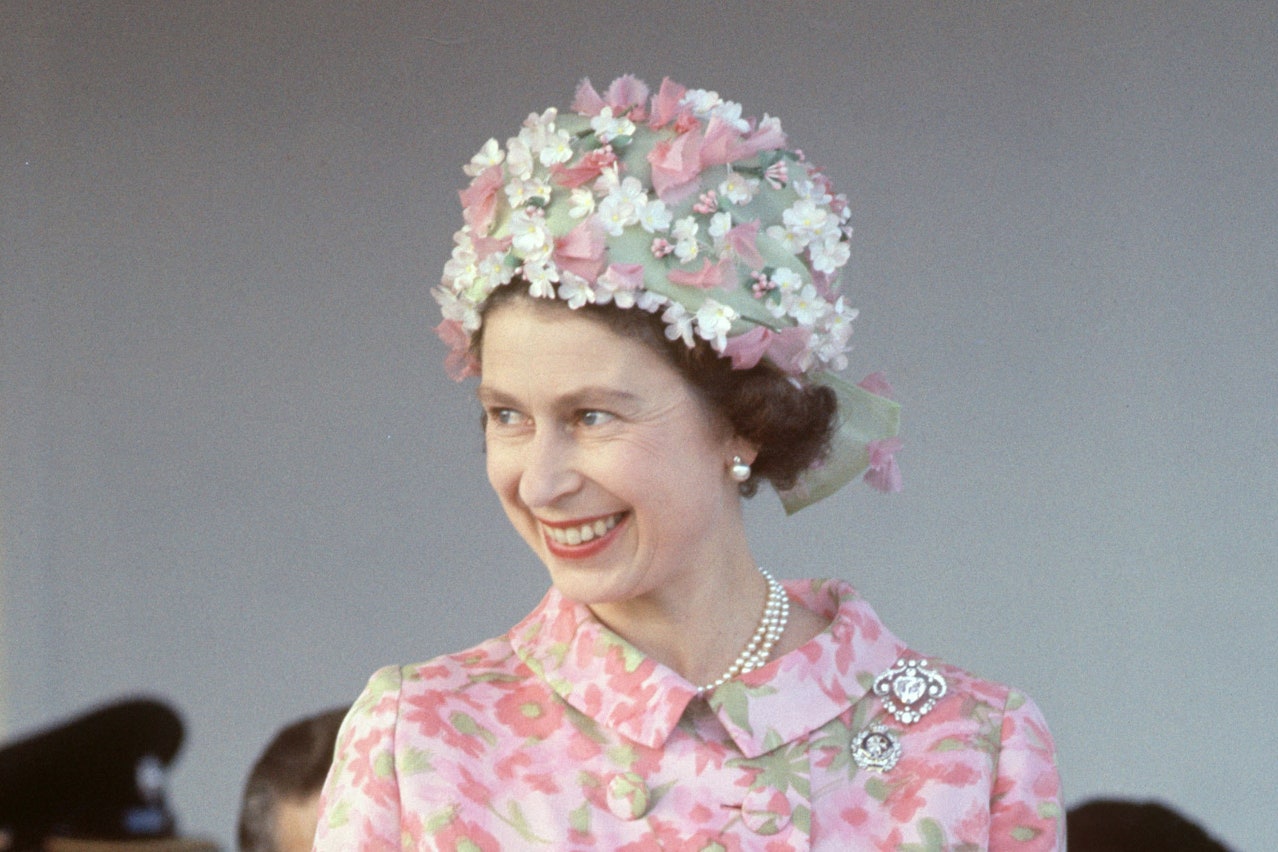 A Detailed Look At The Queen’s Life In Style Gallery 45 Photos
By Naomi Pike
View Gallery
But I don’t think the British people draw their curiously counterintuitive view of the Queen from novels or histories or even from the newspapers. We spun it ourselves, out of all those photographic images, stretching back almost a century. It starts very early on. I see it even in pictures of the Queen and her sister together, as children, for example the one where they are both in identical ermine, heading somewhere indisputably fancy, but whereas Margaret looks like a princess on her way to a ball, somehow Elizabeth turns the exact same coat into a sensible-looking furry mac that she’s thrown on to keep out the cold. As an image it is prophetic. Everything Margaret went on to wear as a young woman sparkled with sex and fun and the promise of rum cocktails on Jamaican beaches, while everything Elizabeth wore… didn’t. It’s not really a physical difference, for their figures as young women were much the same: top-heavy, little waist, sturdy legs, narrow ankles. It’s more a question of attitude. Elizabeth – maybe in unconscious response to her wilder sister – always looked a sensible girl, even in taffeta and lace, and never looked lovelier, in my opinion, than in her ATS uniform, atop a horse, looking sensible. Duty becomes her. It always did.
Meanwhile those youthful party dresses – be they ever so perfectly fitted – were always somewhat unconvincing. You can see her longing for middle age, even in her twenties: and then finally it comes, bringing the great sartorial opportunities of tweed skirts, headscarves, helmet hair and those shiny black court shoes with the buckle that she has worn now almost without pause since the mid-Eighties. It is in this look that I believe the Mrs Windsor of our minds finds her fullest expression. From her fifties on, when fanciness was required she found a permanent solution in those staid shift dresses and matching coats, all in single bright blocks of colour – topped off with matching hat. To put it in lower-middle-class terms, she found “what suited her” and she “stuck to it”, a sentiment as familiar to British women up and down the nation as its aesthetic twin: “I don’t know a lot about art but I know what I like.”
,
